
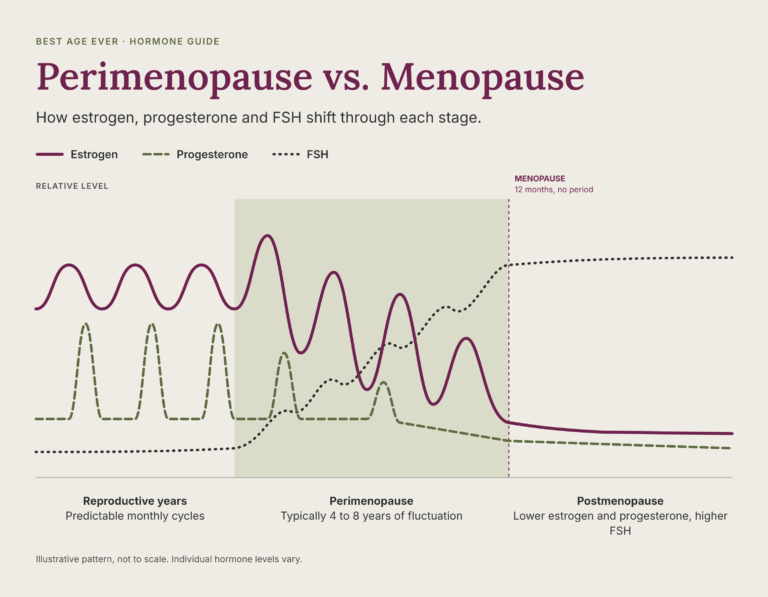
What is the difference between perimenopause and menopause? Perimenopause is the transitional period leading up to menopause, while menopause is diagnosed after 12 consecutive months without a menstrual period. Postmenopause is the stage that follows and lasts for the remainder of a woman’s life.
Understanding how hormones change during each stage can help explain many of the symptoms women experience and empower them to make informed decisions about their health.
What Is Perimenopause?
Perimenopause is the natural transition before menopause. It typically begins in a woman’s 40s, although some women notice changes in sleep, skin, mood, and cycles as early as their mid-30s or as late as their early 50s. The transition usually lasts between four and eight years.
During perimenopause, the ovaries gradually produce less estrogen and progesterone. But hormone levels do not decline in a straight line; they fluctuate. Estrogen may rise and fall unpredictably, leading to mood changes, bloating, digestive issues, and more. As ovulation becomes less frequent, progesterone can also decline.
These hormonal fluctuations can contribute to a wide range of perimenopause symptoms, including:
* Irregular periods
* Hot flashes and night sweats
* Mood swings and irritability
* Brain fog and difficulty concentrating
* Sleep disturbances
* Fatigue
* Vaginal dryness
* Reduced libido
* Weight changes
Not every woman experiences the same set of symptoms, and symptom severity can vary significantly.
What Is Menopause?
Menopause is one specific point in time, not a phase. A woman has reached menopause after 12 consecutive months without a menstrual period, assuming there is no other medical cause. In the United States, the average age of menopause is approximately 51.
At menopause, ovarian function has largely ceased. Estrogen and progesterone levels become permanently lower than during the reproductive years, marking the end of natural fertility.
What Is Postmenopause?
Postmenopause begins immediately after 12 consecutive months without a period and is the stage that follows menopause for the rest of a woman’s life.
Although hot flashes and other symptoms often become less frequent over time, lower estrogen levels can affect long-term health. Estrogen plays an important role in maintaining bone strength, cardiovascular health, skin, urinary function, and vaginal tissue. This is why postmenopausal women have an increased risk of osteoporosis and other age-related health concerns.
How Hormones Change During Perimenopause and Menopause
During the reproductive years, estrogen and progesterone follow a predictable monthly cycle. As perimenopause begins, ovarian function becomes less consistent, causing hormone levels to fluctuate from cycle to cycle.
Eventually, ovulation stops altogether. Estrogen and progesterone decline to their long-term postmenopausal levels, while follicle-stimulating hormone (FSH) rises as the body attempts to stimulate the ovaries. These changes drive many common menopause symptoms.
Frequently Asked Questions
What is the first sign of perimenopause?
For many women, the earliest sign is a change in menstrual cycle length or flow. Others first notice sleep problems, mood changes, bloating, or occasional hot flashes before their periods become irregular.
How long does perimenopause last?
Most women experience perimenopause for four to eight years, although the transition can be shorter or longer.
Can you get pregnant during perimenopause?
Yes. Pregnancy is still possible as long as ovulation continues, even if periods have become irregular.
Is menopause a disease?
No. Menopause is a normal biological stage of life. However, the hormonal changes can produce symptoms that affect quality of life and may benefit from lifestyle modifications, nutritional support, or medical care.
Supporting Your Health Through the Menopause Transition
Healthy nutrition, regular physical activity, strength training, stress management, quality sleep, and working with a knowledgeable healthcare provider can help support women throughout perimenopause and menopause. Some women also explore evidence-based dietary supplements or hormone therapy, depending on their symptoms, medical history, and personal preferences.
Understanding how hormone levels change over time helps women recognize what’s happening in their bodies and seek support. While every woman’s experience is unique, menopause is a normal life transition, not an illness, and the right information can help women navigate it with confidence.
Key Takeaway: Perimenopause is the transitional period when estrogen and progesterone begin to fluctuate. Menopause is the milestone reached after 12 months without a period. Postmenopause follows, with permanently lower hormone levels and a greater focus on protecting long-term bone, heart, and overall health.
